Potting Mix Matters: Secrets to Thriving Container Plants
"The secret to thriving container plants isn't just the plant—it's the life they live in: the soil."
Choosing the right potting mix is the difference between a lush balcony garden and a graveyard of yellowing leaves. You cannot simply scoop dirt from your backyard into a ceramic pot and expect success.
* Potting mix is not universal; it must match the specific needs of the plant and its container size. * Proper drainage and aeration are crucial for root health and preventing root rot. * The mix must balance structure (drainage) with nutrition (water retention/nutrients). * Adjusting the mix composition is key to long-term success in container gardening.
Why "All-Purpose Soil" Fails in Pots
I stood in my kitchen on Saturday morning in 2025, staring at a drooping peace lily that had been sitting in a heavy, dark bag of "Premium Garden Soil" for three months. The leaves were limp, and the pot felt unnaturally heavy, like a wet sponge.
The fundamental problem is that garden soil and potting mix are two entirely different worlds. Garden soil is designed to be heavy, mineral-rich, and stable in the ground where gravity and earth provide structure. If you put that same heavy soil in a pot, it compacts.
It squeezes out the tiny pockets of air that roots need to breathe, effectively suffocating the plant.
A proper potting mix is engineered for aeration. It usually contains lightweight materials like peat moss, coconut coir, or perlite to ensure that even when the mix is wet, there is still air moving through the root zone.
While many beginners think they need a thick layer of gravel at the bottom of a pot to create a "drainage layer," this can actually be a myth. A thick layer of rocks at the bottom can create a perched water table, where water sits in the soil above the rocks rather than draining out.
It is much more effective to ensure the entire mix is porous and that the pot has adequate drainage holes.
When the soil becomes too dense, it creates anaerobic conditions—environments where oxygen is absent. This is the primary driver of root rot, where fungal pathogens thrive in the soggy, airless dark.
But knowing the difference between soil types is only half the battle.
Matching the Mix to the Plant: A Prescription Approach
I remember the first time I tried to grow a desert cactus in a standard potting mix in the summer of 2024. I watered it once a week, and within a month, the base of the plant turned to mush. It was a lesson in "prescriptive" gardening: one size does not fit all.
Every plant group has a specific "prescription" for the medium they live in. You must match the mix to the biology of the plant you are growing.
| Plant Type | Primary Need | Recommended Mix Components |
|---|---|---|
| Succulents & Cacti | Extreme Drainage | High grit, pumice, coarse sand, minimal peat |
| Annuals & Vegetables | Moisture Retention | Peat/Coir base, compost, moderate perlite |
| Tropicals/Foliage | Consistent Moisture | Coconut coir, bark chips, compost, perlite |
| Orchids/Epiphytes | High Aeration | Bark, charcoal, sphagnum moss |
For succulents and cacti, you need a mix that mimics an arid environment. This means high levels of inorganic materials like perlite, pumice, or coarse sand to ensure water passes through almost instantly.
For annual flowers and vegetables, you need a balance. They need to hold enough moisture to support growth but drain well enough that they don't sit in a swamp. Adding a bit of compost to a standard mix can help provide the organic punch these heavy feeders need.
For tropical plants, the goal is a "sponge" effect. You want a mix that stays consistently moist but doesn't become a heavy, muddy mess. Using a base of coconut coir or peat moss mixed with bark chips can provide that perfect balance of moisture and air pockets.
However, even with the right mix, the biological life within that medium can become a trap.
Beyond the Bag: Building a Living Soil System
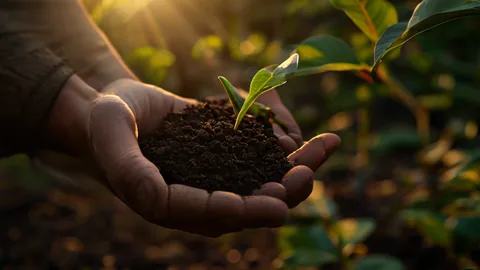
I sat on my porch on a Tuesday evening in 2025, digging through a bag of organic compost, thinking about how much energy is actually stored in a handful of dirt. It isn't just "stuff"; it is a biological engine.
The role of organic matter in your pots is to provide a slow-release buffet for your plants. While synthetic fertilizers provide an immediate chemical hit, organic matter like compost builds the structure of the soil over time.
However, container plants face a unique challenge: they deplete nutrients much faster than plants in the ground. Because the volume of soil is limited, the "bank account" of nutrients in a pot is much smaller.
When you buy a commercial potting mix, look for a "starter pack" of ingredients. A good mix should have a base of peat or coconut coir for moisture, and added aeration components like perlite or vermiculite.
When considering how to feed your plants, remember that nutrient requirements vary wildly.
For instance, in larger-scale agriculture, a maize crop yielding 6 to 9 tonnes of grain per hectare requires 31 to 30 kilograms of phosphate fertilizer to be applied; soybean crops require about half, 20 to 25 kg per hectare.
While your backyard pots won't need these massive industrial quantities, the principle of balancing nitrogen and phosphorus remains vital.
For example, if you use an ammonium nitrate-based fertilizer (which contains 34% to 35% nitrogen), you must be careful not to over-apply in a small pot, as the salt buildup can damage delicate roots.
The balance of nutrients is vital, but knowing how to fix a dying plant is even more critical.
Troubleshooting: When Your Plant is Struggling
I once spent an entire Sunday morning in 2025 trying to figure out why my ferns were dying, only to realize I was overwatering them in a pot that was too heavy for their roots to breathe. It was a frustrating, expensive lesson in diagnosis.
If your plant is struggling, the first step is to look at the soil. If the leaves are yellowing and the soil feels heavy or smells sour, you likely have a drainage problem. The solution is to repot into a more porous mix or a larger, well-ventilated container.
If the leaves are wilting but the soil is bone-dry, your plant is likely thirsty or the soil has become "hydrophobic"—it has become so dry that it actually repels water. In this case, you may need to soak the entire pot in a bucket of water to re-hydrate the medium.
| Symptom | Likely Cause | Immediate Action |
|---|---|---|
| Yellow, mushy leaves | Overwatering / Root Rot | Stop watering; check drainage holes; repot in grit-heavy mix |
| Wilting / Crispy edges | Underwatering / Dry Soil | Water thoroughly; check if soil needs refreshing |
| Pale, stunted growth | Nutrient Depletion | Apply a diluted, liquid organic fertilizer |
| White crust on surface | Salt/Mineral Buildup | Flush the soil with heavy water runs |
When a plant is in crisis, you have to decide between a "rescue mission" or a total overhaul. If the roots are still firm, you might be able to save the plant by mixing in more perlite or bark to increase aeration.
If the roots are black and slimy, the plant must be repotted into fresh, sterile medium immediately to stop the spread of rot.
To prevent these crises, follow this routine:
- Insert your finger two inches deep into the soil to check moisture levels.
- If the soil feels cool and damp, skip watering for another 24 to 48 hours.
- If the soil feels dry and crumbly, water thoroughly until it drains from the bottom.
- Once a month, perform a "flush" by running heavy water through the pot to wash out salts.


Comments 0